Stakeholders come together to collaborate on critical water issues
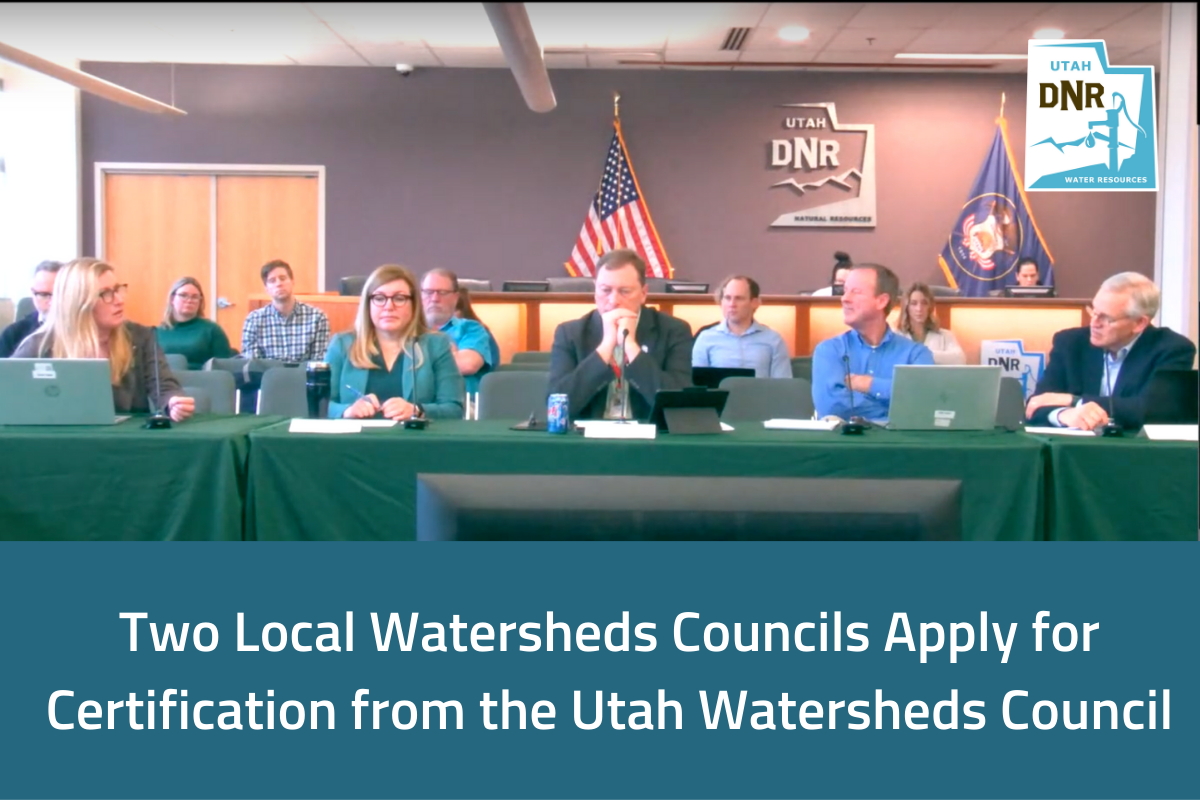
SALT LAKE CITY, UT (April 11, 2023) – The Bear River and Jordan River watershed councils will apply for certification from the Utah Watersheds Council on April 12 at 9 a.m. at the Department of Natural Resources in Salt Lake City. If granted, this certification will make them the first functioning local watershed councils under the Utah Watersheds Council Act.
The Utah Watersheds Council, organized in 2022, was created to develop a diverse and balanced stakeholder forum to discuss water policy and resource issues. This state council is directed to serve as a forum to encourage discussion and collaboration among water interests for the benefit of Utah stakeholders. It also facilitates coordination between state and federal agencies in the administration of water-related activities, including issues of conservation and Great Salt Lake.
“We have been on a wild ride going from extreme drought to record-breaking snowpack in just a couple of years. As time goes by, managing and balancing our water among competing demands is crucial. Possible certification of these first two local councils is an exciting moment for water users in the Bear and Jordan River watersheds,” said Candice Hasenyager, director of the Division of Water Resources. “While watershed councils are not bodies vested with regulatory, financing, or enforcement powers, this will be a great forum to encourage and facilitate discussion and collaboration to help address water issues on the local level.”
Once certified, the Jordan River and Bear River watershed councils will convene diverse water-related interests in their basins and in turn send representatives to the state council. These local councils are created to help foster new relationships in local watersheds and are designed to encourage people of different backgrounds to work together to share ideas and find solutions.
In 2020, the Utah Legislature passed the Utah Watersheds Council Act, directing the Division of Water Resources to form a statewide watershed council and twelve local councils in designated watersheds throughout the state. The Division of Water Resources and the state council will provide resources and support for the administration of these local councils, and consult and seek guidance from local councils. The state council will also advise the Governor and Legislature on water issues.
For more information on the Utah Watersheds Councils Act and implementation, visit water.utah.gov/watershed-councils. For more information, contact Michael Sanchez, public information officer, at 385-226-8967 or email msanchez@utah.gov.
###
The Utah Division of Water Resources is one of ten divisions housed within the Department of Natural Resources. Tasked with planning, conserving, developing and protecting Utah’s water resources, the division serves as Utah’s water steward.