
SALT LAKE CITY (August 15, 2024) – Precipitation this summer has been underwhelming for most of the state. Heat has also been a major issue over the past months. Continued water conservation efforts are crucial as demand for water increases during these hotter months.
“The state has been drying out this summer. Monsoons have been present in some form, but have been few and far between,” Candice Hasenyager, director of the Division of Water Resources, said. “We need more of these monsoons to saturate our soils for an efficient spring runoff next year.”
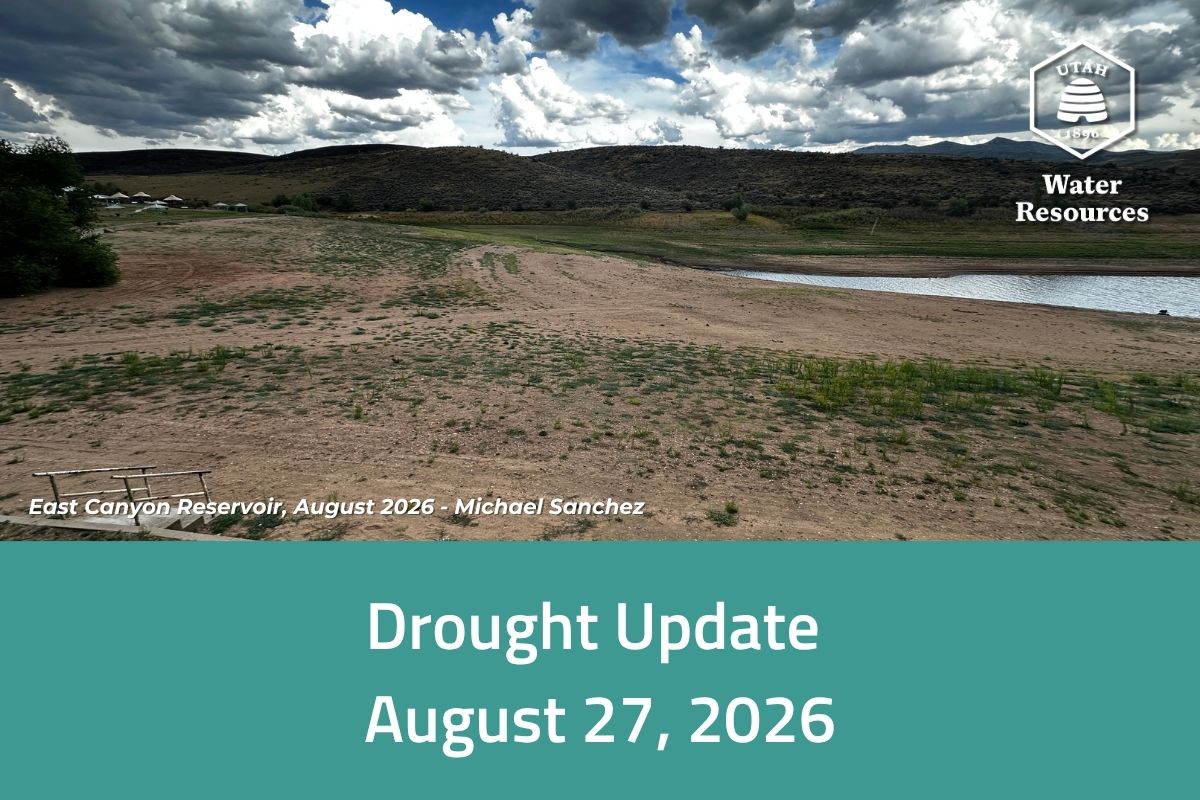
According to the August Climate and Water Report produced by the Natural Resources Conservation Service, statewide soil moisture at Utah’s Soil Climate Analysis Network (SCAN) sites ended July at 39% of saturation. Concerningly, this is in the bottom 10th percentile of all observations since Utah’s SCAN sites were installed. Recent storms have increased soil moisture, however, more is needed to bring soil moisture up to near-normal levels.
Summer monsoons had a hopeful start this year. Unfortunately, July precipitation was disappointing. All basins in the state, excluding the Raft in northwestern Utah, have had below-average precipitation. Temperatures have been warmer than average over the past 60 days. Higher daytime temperatures also mean higher night temperatures.
“Keep an eye on the sky and adjust your yard’s irrigation schedule accordingly,” Hasenyager said. “Also, fall is a great time to convert nonfunctional lawn to water-wise landscaping. This creates a beautiful, low-maintenance area and saves water.”
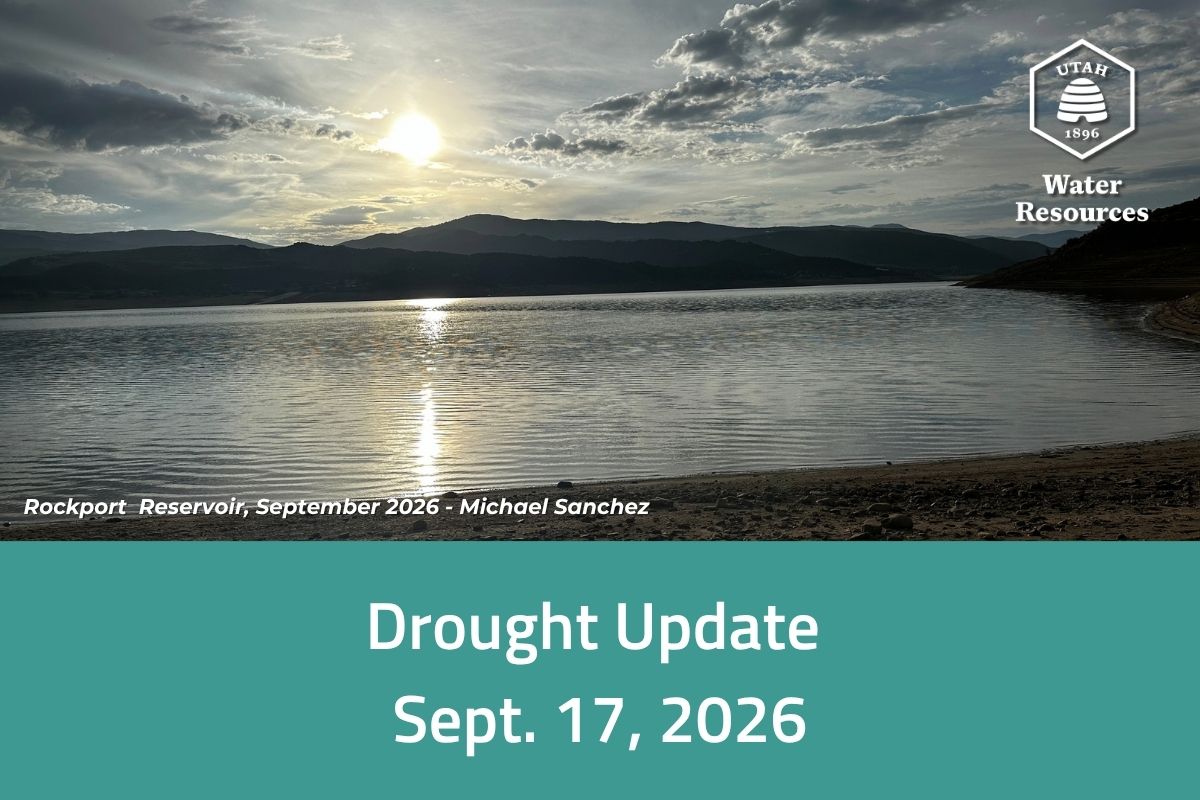
Statewide, reservoirs are currently 82% full on average. This level is around 18% higher than normal and 3% higher than this time last year. While this is a welcome sight, recreating on reservoirs can be dangerous without proper safety precautions. The most important safety tip is to always wear a life jacket while on the water. About 80% of boating fatalities occur because boaters were not wearing life jackets. Visit the Utah Division of Recreation’s life jackets and boating safety webpage for more information.
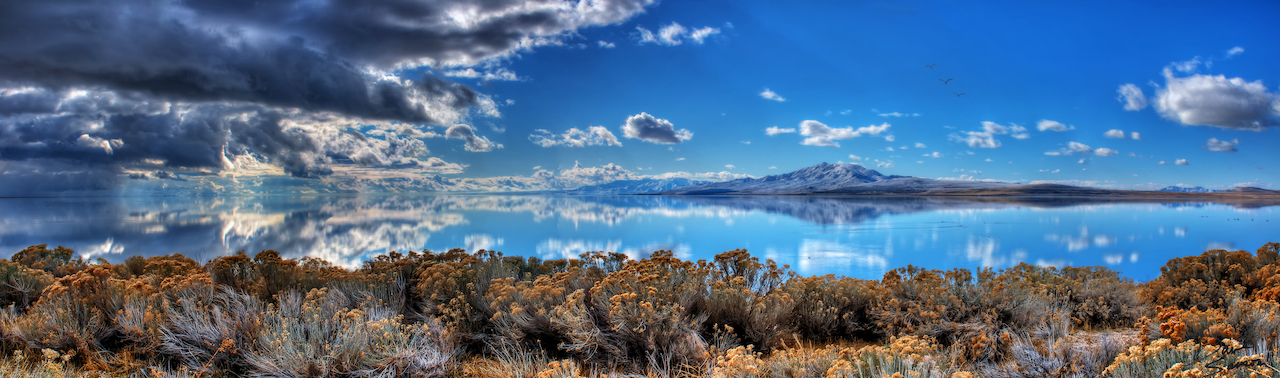
The south arm of Great Salt Lake has dropped nearly two feet since its peak in May. Typically, the lake level fluctuates 2.5 feet annually, peaking during spring runoff and dropping to a seasonal low in October or November. This drop is mostly due to evaporation and water flowing to the lake’s north arm.
In Utah, about 95% of our water supply comes from snowpack. Reservoir storage helps us preserve that water for use in dry summer months and drought years. To encourage water conservation among Utahns, the Department of Natural Resources continues to promote initiatives such as the Agricultural Optimization Program for farmers and SlowtheFlow.org for residents. These programs aim to educate and incentivize water-saving practices, ensuring Utahns become more drought-resilient and prepare for future conditions.
# # #
For more information, contact Michael Sanchez, public information officer, at 385-226-8967 or email msanchez@utah.gov.