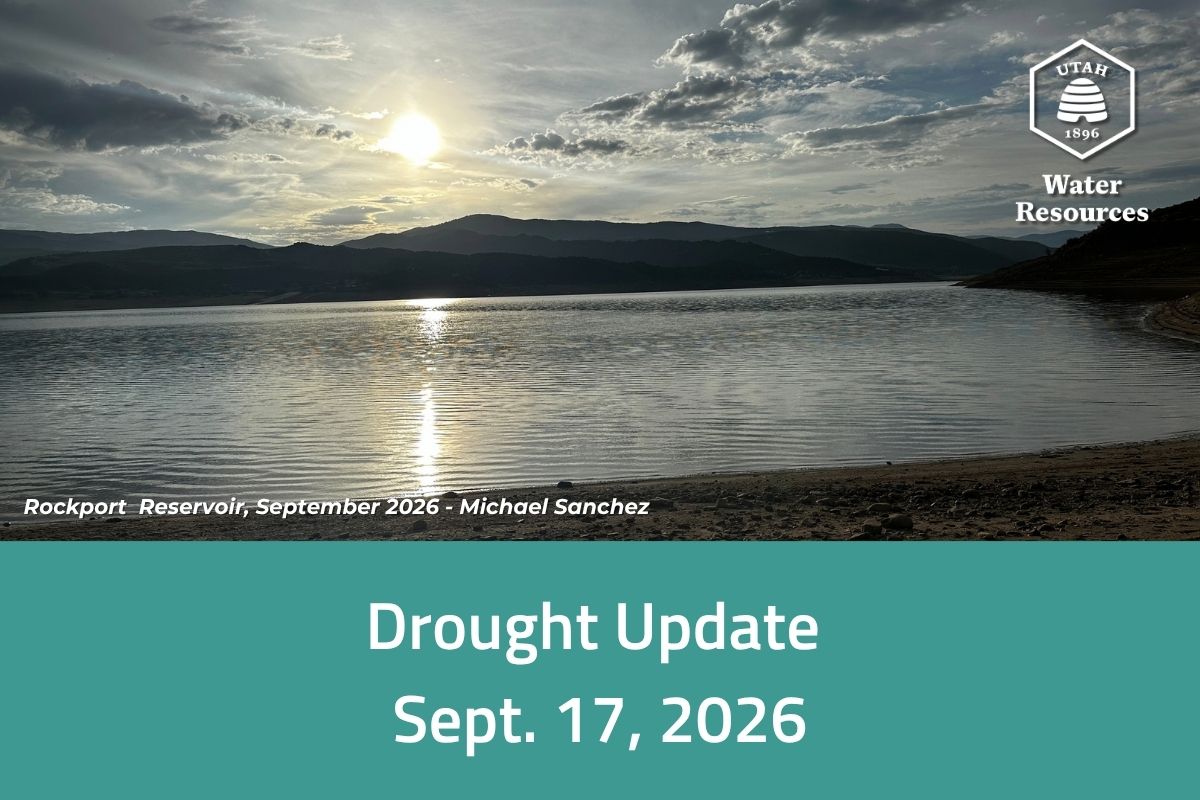
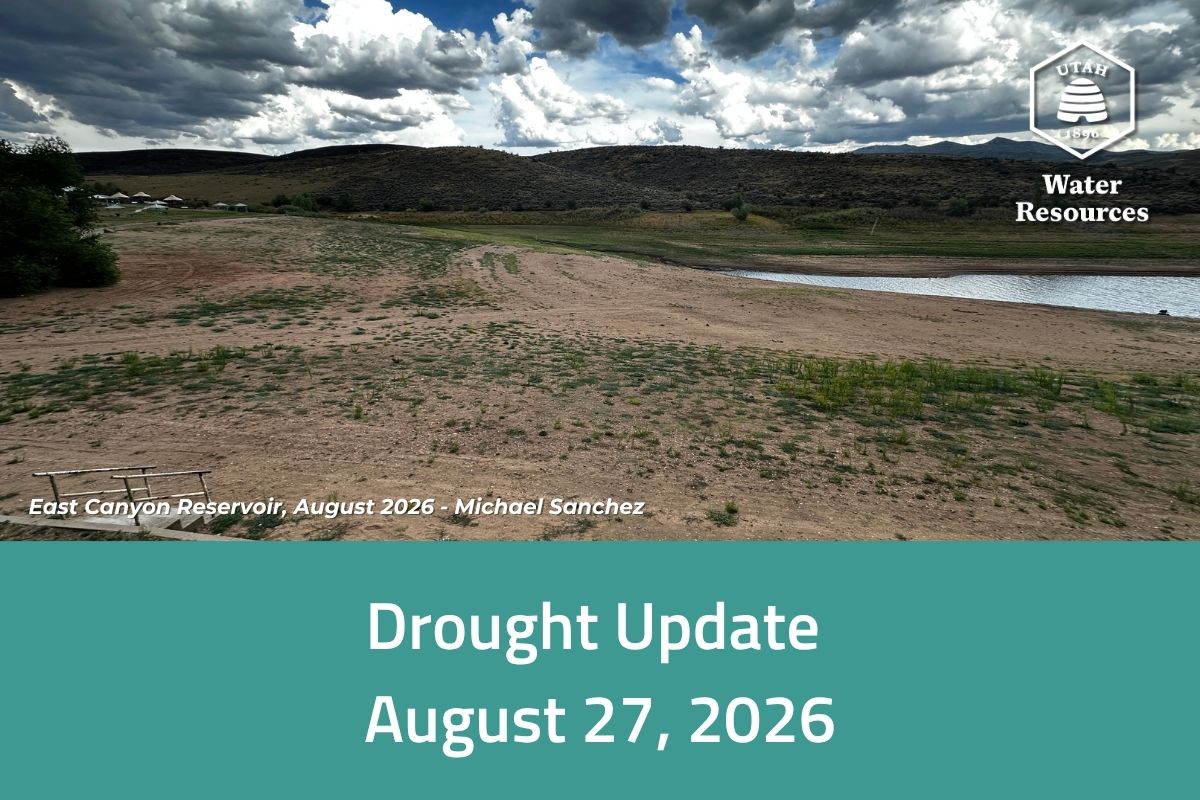
SALT LAKE CITY (August 27, 2026) – While recent monsoon rains have reduced demand on local supply and storage in some areas, it will not be enough to pull Utah out of the drought. Reservoirs and lakes will continue to decline until October, when irrigation season ends.
“Our reservoirs, lakes and streams are really struggling this year,” Joel Williams, director at the Division of Water Resources, said. “Utahns must continue efforts to protect our water supply, as every drop saved today adds to our collective resilience.”
Conditions at a Glance
- Statewide reservoir storage is at 52%
- 1,028 wildfires have been reported this year
- 100% of the state is in some form of drought
Recreation Tips for Monsoon Season
While monsoon rains can provide some relief, they also bring unpredictable weather conditions. It is important to stay informed and prepared for potential risks such as flash flooding. Please visit beready.utah.gov for resources and tips on staying safe during these weather patterns.
Wildfire Update
Utah has experienced 1,028 wildfires that have burned over 553,150 acres this year. Three of the top 10 largest wildfires in state history have burned this season: the Cottonwood fire (96,181 acres), the Babylon fire (102,854 acres), and the Widemouth 2 fire (129,742 acres). More than 200 structures have been lost statewide, and we have tragically lost four federal wildland firefighters on the Snyder Fire and two pilots supporting the Widemouth 2 Fire. Utahns are encouraged to continue practicing Fire Sense, as wildfire activity remains significant and conditions can change quickly.
Bear Incidents Doubled From Last Year in Utah
Due to several factors — including ongoing severe drought conditions — the number of bear incidents requiring the Utah Division of Wildlife Resources to respond this year has doubled from last year. As of Aug. 25, DWR biologists and other partnering law enforcement agencies have responded 168 times so far this year to bear issues across the state. In 2025, the DWR responded 83 times to bear issues in Utah. Find more information here.
Reservoirs, Lakes and Streams Impacted
- Reservoir storage averages 52% full, which is 15% lower than normal for this time of year, and 18% lower than the same time last year.
- At Fred Hayes State Park at Starvation, low water levels are creating new terrain and boating hazards. The boat ramp is open, but needs constant attention. When reservoirs reach low levels, some parks are forced to close their boat launch ramps in order to help better protect visitors and their property. Visit the Division of State Parks boat ramp conditions webpage for more information.
- Because Harmful Algal Blooms (HABs) are happening across the state, residents are urged to learn how to identify them and find current water advisories at HABs.utah.gov.
River Conditions Reflect Continued Drought Across Utah
As Utah moves through late August, drought conditions continue to affect streamflows and water distribution across several major river systems. Conditions vary by basin, with differences in snowpack, summer precipitation and reservoir releases influencing water availability.
Key Observations from Around the State
- Bear River – Natural flow is 396 cfs, providing about 28% of direct flow rights. Conditions are similar to the average 2020 water year, with better snowpack, summer rainstorms and storage releases helping support flows.
- Upper Provo River – Natural flow is 50 cfs, providing about 16.2% of direct flow rights. Summer monsoons have temporarily increased flows, but drought conditions continue without additional moisture.
- Upper Duchesne River – Natural flow is 233 cfs, providing about 18.4% of direct flow rights. Flows remain below those seen during average and wet years and have steadily declined through the summer.
- Upper Sevier River – Natural flow is 49 cfs, providing about 9.3% of first-class direct flow rights. Flows are less than half those recorded during the 2021 drought year as drought conditions persist.
For detailed river system statistics and conditions, see the full report here.
Conservation Efforts
The state continues to promote initiatives such as the Agricultural Water Optimization Program for farmers and SlowtheFlow.org for residents. These programs aim to educate and incentivize water-saving practices, helping Utahns become more drought-resilient and better prepared for future conditions. Many indoor water-saving tips are available on the Slow the Flow website.
# # #
For more information, contact Michael Sanchez, public information officer, at 385-226-8967 or email MASanchez@utah.gov.