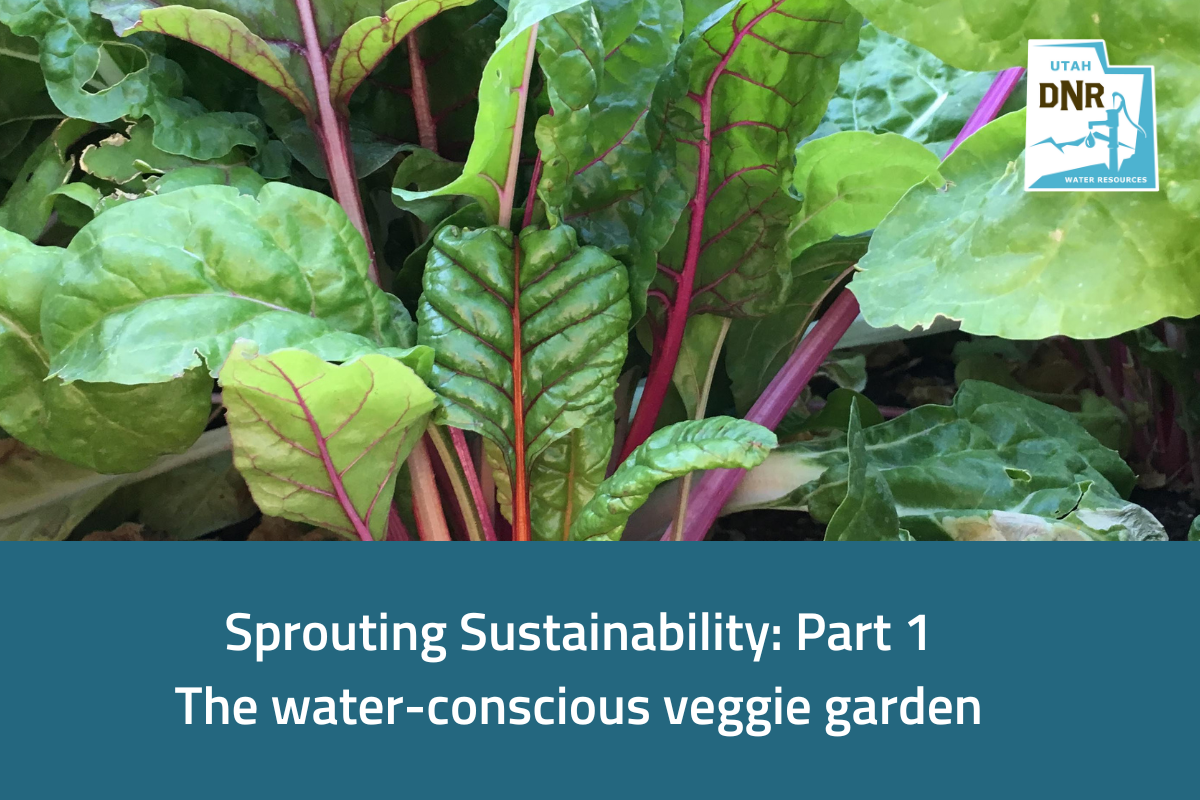
Amidst Utah’s semi-arid landscape — where the intricate weave of watersheds demands intentional water stewardship — cultivating water-efficient veggie gardens is a wise, sustainable and beneficial use of the precious resource.

Here, in part one of the two-part Sprouting Sustainability series, we’ll delve into the unique needs of our state’s watersheds, reveal Utahns’ attitudes about landscape choices and explore the enticing incentives available to those interested in converting parts of their traditional lawn that they don’t use, to a vibrant garden.
Watersheds wonders
From the bustling developments of the Wasatch Front to the agricultural expanses of the Wasatch Back, it’s important to point out that different watersheds have varying needs. While the Wasatch Front directs the majority of its water towards neighborhoods, shopping centers and educational institutions, the Wasatch Back prioritizes agricultural production. Because we can’t move water between watersheds (wouldn’t that be fancy?), there’s a need for holistic water conservation efforts across all sectors, statewide.

We like your attitude
Thankfully, a growing number of people recognize that practicing water conservation at home plays a pivotal role in safeguarding Utah’s water supply for future generations. In a recent statewide survey about Utah’s growth, we learned that a remarkable 80% of urban Utahns support incentives aimed at encouraging low-water-use landscape conversions. This growing awareness of how individual landscape choices impact our collective water “footprint” gets us excited as we continue to improve and expand our incentive programs!
What’s in it for you?
Speaking of incentives, here’s the scoop: there are now 60 eligible areas throughout Utah that can take advantage of the statewide landscape incentive program. This program — which we co-run alongside Washington County, Jordan Valley, Central Utah and Weber Basin Water Conservancy Districts — offers money (up to $3 per square foot) to those replacing traditional lawns with water-efficient landscapes, including gardens! By participating in this program, you’re not only contributing to water conservation efforts but also creating vibrant and productive spaces that enhance the ecological health of our communities and provide habitat for pollinators like bees and butterflies.

Sustainability + practicality
While both lawns and veggies are beneficial and have similar water needs, using drip irrigation systems in gardens offers a significant efficiency advantage. Unlike traditional sprays and rotors, drip systems deliver water directly to the roots, minimizing waste and maximizing absorption. In part two of this series (coming soon) we’ll provide actionable tips on how you can begin creating your water-efficient garden.
Water-efficient veggie gardens are a harmonious marriage of sustainability and practicality within Utah’s watersheds. By harnessing the power of efficient irrigation methods, replacing parts of your lawn you don’t actually use and taking advantage of available landscape incentives, you can play a vital role in sustaining Utah’s water resources while enjoying the bountiful rewards of your labor. Now, head over to part two of this series to learn how to get to work cultivating your veggie paradise.