image shows the Wasatch Mountains with minimal snow, mostly in higher elevations

Utah Water Conditions Update March 2026

Published 03-19-26

SALT LAKE CITY (March 19, 2026) – Utah’s snowpack is the lowest on record and peaked three weeks early. The state’s peak was on March 9 at 8.4 inches, which is about half of what the state typically receives by the beginning of April. Weather forecasts suggest that snowmelt will outpace any new snow the state might receive. 

(more…)
Image shows Echo Reservoir from a plan with snow on the mountains

Wings Over Weber ASO Project: A new era of snow measurement for the Great Salt Lake Basin 

Published 03-10-26

The Utah Division of Water Resources has partnered with Weber Basin Water Conservancy District and the Great Salt Lake Commissioner’s Office to expand and explore the use of Airborne Snow Observatories (ASO) technology in the Great Salt Lake Basin. This ASO project,  known as “Wings over Weber”, is the second of its kind in Utah and the first focused on a watershed within the GSL Basin. The project is funded, in part, by a grant from the Bureau of Reclamation.

(more…)
picture shows an image of a mountain range in Kamas. It shows a very small amount of snow on the mountains.

Utah Water Conditions Update December 2025

Published 12-18-25

SALT LAKE CITY (Dec. 18, 2025) – A warm and dry December and November have left the state with below-normal snow totals. While this is a reason for concern, two or three good storm cycles could bring the state up to normal levels. Utah’s snowpack typically peaks around the beginning of April. 

(more…)
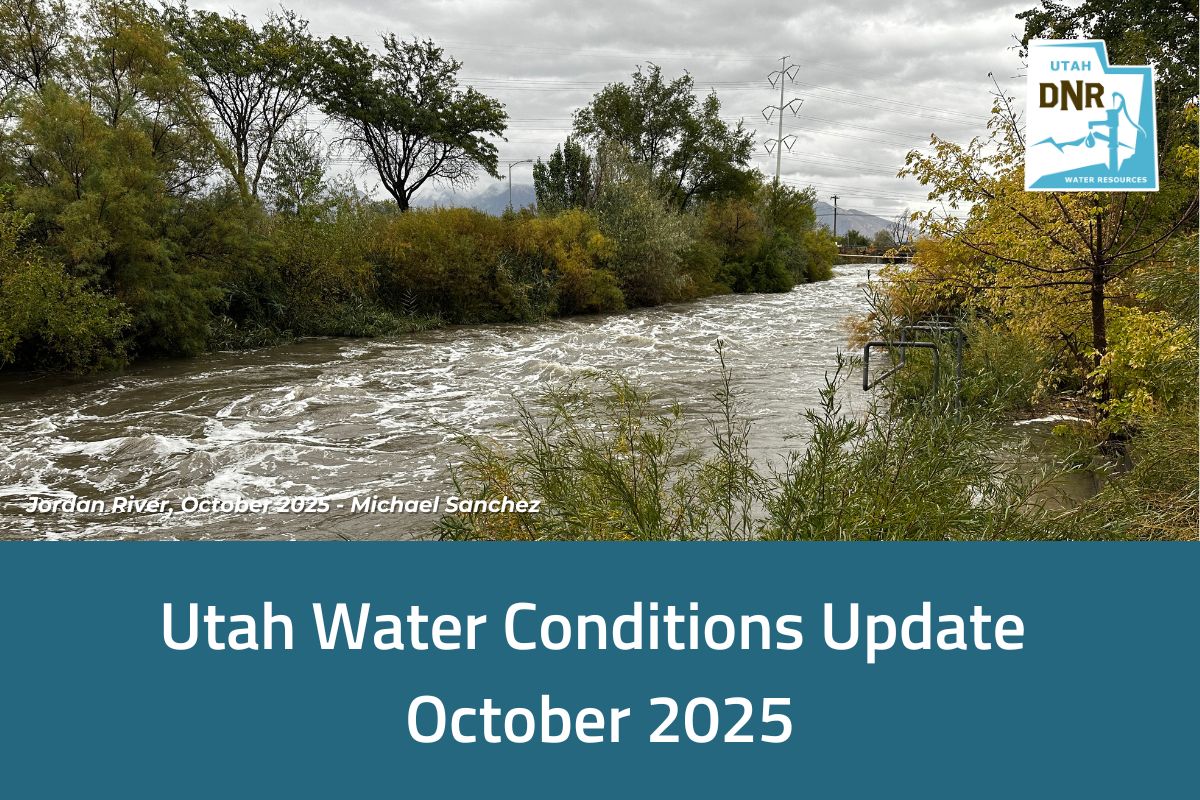
graphic shows the Jordan River with trees along the banks changing to fall colors. The sky is overcast.

Utah Water Conditions Update October 2025

Published 10-21-25

SALT LAKE CITY (October 21, 2025) – The beginning of our Water Year, which began on Oct. 1, has delivered outstanding early-season precipitation. This historic moisture has profoundly improved water conditions and significantly boosted the outlook for our region’s water supply. 

(more…)
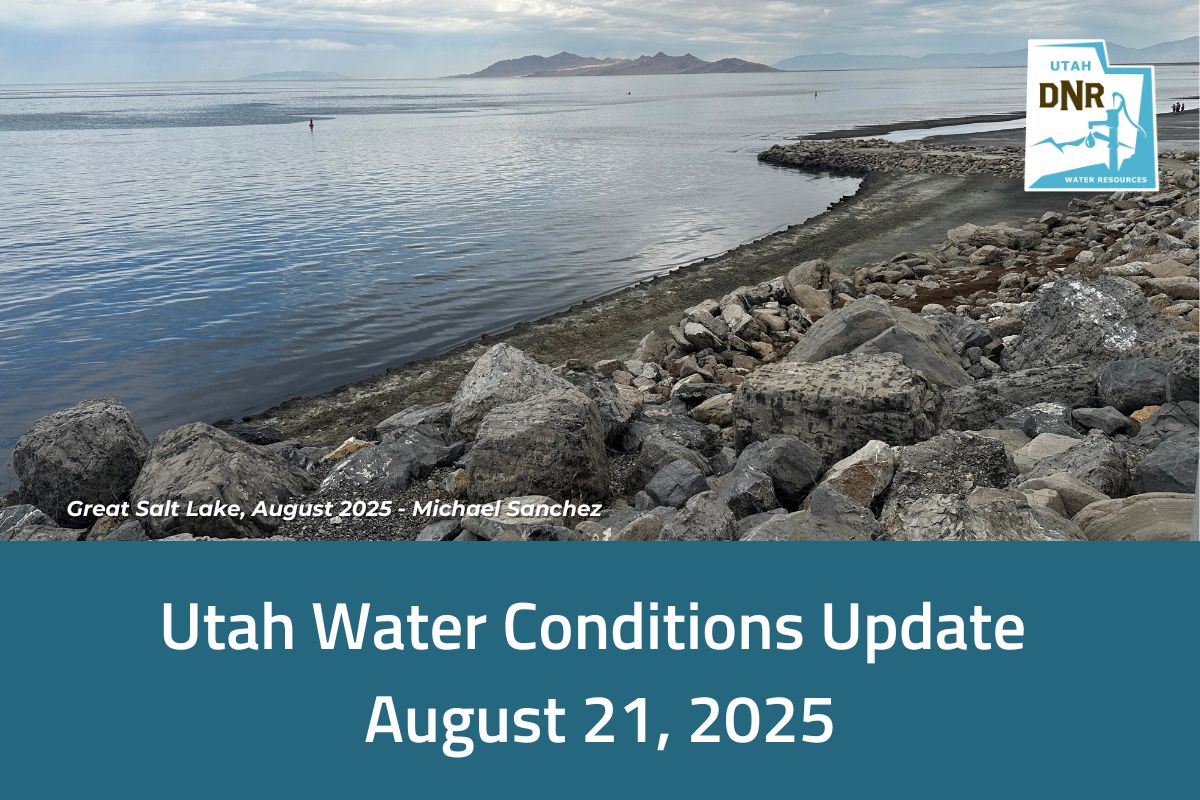
picture shows Great Salt Lake with Antelope Island in the background

Utah Water Conditions Update August 2025

Published 08-21-25

SALT LAKE CITY (August 21, 2025) – Utah’s reservoir levels are showing a drastic decline. Since June 1, the state has drawn down reservoirs at a rate more than double the normal rate. This is due to increased demand, lower-than-normal spring runoff and an extremely dry summer. 

(more…)
Picture shows a river with plants on the banks of the water

Water Conditions Update – July 22, 2025

Published 07-22-25

SALT LAKE CITY (July 22, 2025) – 100% of the state is in moderate to severe drought. On average, our reservoirs have dropped around 10% between June 1 and July 1. Typically, reservoirs drop around 2% during the same period. This is due to increased demand and an inefficient spring runoff earlier this year. 

(more…)
Picture shows East Canyon State Park with mountains in the background on a sunny day.

Utah Water Conditions Update July 2025

Published 07-01-25

SALT LAKE CITY (July 1, 2025) – With the peak of summer ahead, state water officials are planning for hot, dry weather driving up demand. With drought conditions persisting across the state, using water wisely is more important than ever. Storms in the southern part of the state have improved the situation, while drought conditions have worsened in the northern part of the state. Overall, 91% of the state remains in moderate to severe drought.

(more…)
Image shows Great Salt Lake from Antelope Island

Gov. Cox Issues Drought Executive Order

Published 04-24-25

Water conservation critical as Utah’s water supply faces a drier year

Salt Lake City (April 24, 2025) – With low streamflow forecasts, increased water demand as temperatures rise and southern Utah experiencing extreme drought, Gov. Spencer J. Cox issued an Executive Order today declaring a state of emergency in 17 counties due to drought conditions. The counties include: Washington, Iron, San Juan, Kane, Juab, Emery, Grand, Beaver, Garfield, Piute, Millard, Tooele, Uintah, Carbon, Sevier, Sanpete and Wayne. This declaration reflects USDA’s disaster classifications that are informed by the U.S. Drought Monitor and NRCS’s water supply report.

(more…)