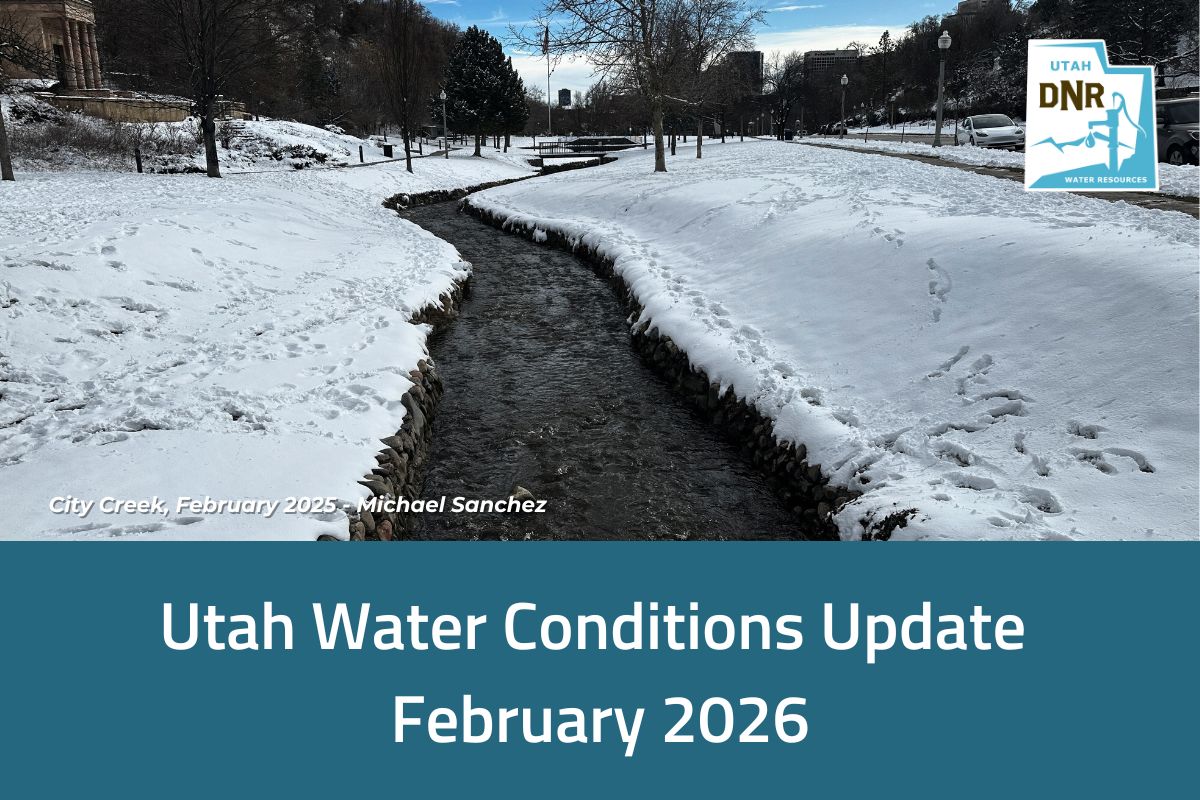

SALT LAKE CITY (March 19, 2026) – Utah’s snowpack is the lowest on record and peaked three weeks early. The state’s peak was on March 9 at 8.4 inches, which is about half of what the state typically receives by the beginning of April. Weather forecasts suggest that snowmelt will outpace any new snow the state might receive.
“We are urging our communities and local water providers to review drought contingency plans,” Laura Haskell, drought coordinator at the Utah Division of Water Resources, said. “These plans will provide clarity and actions to assist with slowing the impacts of drought.”
Water conservation remains critical as water managers prepare to rely on existing reservoir storage to meet summer demands. Reservoir storage averages 68% full, which is slightly higher than normal for this time of year but a decrease from the 80% recorded last year.
This winter was the warmest on record for the state by 2.2 degrees F, dating back to 1874. Salt Lake City surpassed its previous record by over 7 degrees F.
As noted in the Natural Resources Conservation Service’s March 1st Water Supply Outlook Report, as of March 5, 30% of Utah’s SNOTEL network was reporting its worst or second-worst snowpack.
Currently, 98% of the state is in some form of drought. Additional drought recommendations for communities and water providers are available in the state’s Drought Response Plan.
The Department of Natural Resources continues to promote initiatives such as the Agricultural Water Optimization Program for farmers and SlowtheFlow.org for residents. These programs aim to educate and incentivize water-saving practices, helping Utahns become more drought-resilient and better prepared for future conditions. Many indoor water-saving tips are available on the Slow the Flow website.
# # #
For more information, contact Michael Sanchez, public information officer, at 385-226-8967 or email msanchez@utah.gov.