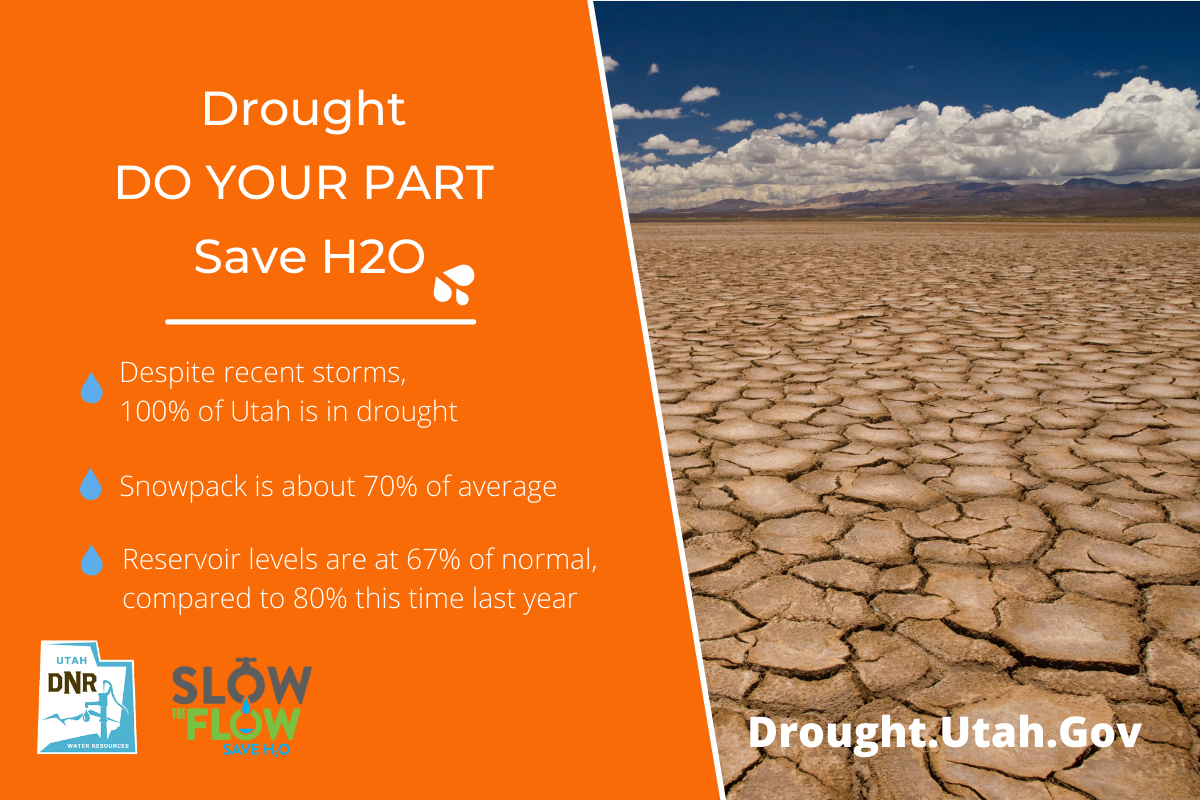
With 100% in the moderate drought category and 90% of the state experiencing extreme drought, today Gov. Spencer J. Cox issued an Executive Order declaring a state of emergency due to drought conditions. This declaration allows drought-affected communities, agricultural producers and others to officially begin the process that may provide access to state or federal emergency resources.
At its March 15 meeting, the Drought Review and Reporting Committee recommended the governor issue a drought declaration, which activates the Drought Response Committee. Brian Steed, executive director of the Utah Department of Natural Resources, chairs both committees.
“We’ve been monitoring drought conditions carefully and had hoped to see significant improvement from winter storms,” said Gov. Cox. “Unfortunately, we have not received enough snow to offset the dry conditions. I ask Utahns to evaluate their water use and find ways to save not only because of current drought conditions but also because we live in one of the driest states in the nation.”
Following a record dry summer and fall, this winter’s snowpack is about 70% of average for the year. For snowpack to reach average, Utah’s mountains would need to receive the remaining 30% before it starts to melt significantly, typically the first week in April. There is around a 10% chance of this occurring.
Current soil moisture is also at the lowest levels since monitoring began in 2006.
“Extremely dry soils mean that when we do receive precipitation, the ground will soak it up first and reduce the runoff that typically fills reservoirs, lakes and streams,” said Steed. “We urge people to consider ways they can save water and help be part of the solution. The state also offers water-saving and money-saving rebates to help with both indoor and outdoor conservation.”
The last time conditions warranted a drought declaration was when former Gov. Gary Herbert issued an executive order on Oct. 15, 2018. At that time, 99% of the state was in a moderate drought, with over 76% of Utah experiencing at least severe drought conditions.
Learn more about current drought conditions and impacts in Utah.
Water-saving Recommendations
Gov. Cox asks Utahns to use water wisely year-round. Find water-saving tips at SlowTheFlow.org.
- Fix leaks
- Run full loads (dishwashers and washing machines)
- Turn off the water while brushing teeth, shaving, soaping up, doing dishes or rinsing vegetables
- Reduce showers by at least one minute
- Wait to water
- Plan now for the irrigation season and consider implementing water-wise landscaping or purchasing a smart irrigation controller
Committees recommend drought action
The Division of Water Resources is tasked with monitoring the state’s water supply availability. This is done through regular drought webinars and monitoring conditions throughout the state. As conditions failed to improve, the division recommended the Drought Review and Reporting Committee consider additional actions, including recommending an official drought declaration, which activates the Drought Response Committee. The Utah Drought Response Plan outlines the process.