SALT LAKE CITY (March 7, 2024) – Utah’s water outlook for March is marked by encouraging developments and notable records. Alta recently experienced its wettest February on record, showcasing the dynamic nature of our climate and its potential impact on water resources.
“Alta’s record-breaking February reminds us how much can change in a month,” Candice Hasenyager, director of the Division of Water Resources, said. “Our statewide snowpack has been consistently above normal since the beginning of February, which has really put Utah in a good position as we head into spring.”
According to the Natural Resources Conservation Service in their March 1st Water Supply Report, the state received 157% of our typical amount of snow water equivalent (SWE) for the month, and our statewide SWE percent of normal ended the month at 117%.
Entering the traditionally wettest months of March, April and May, Utah’s water situation is robust. Soil moisture remains favorable, setting the stage for optimal conditions as we approach spring runoff. Saturated soils will allow more water to make its way to reservoirs and streams.
Stream gauges contribute to this positive narrative, with 60% currently flowing normal to above-normal levels. This widespread positive trend enhances the resilience of Utah’s water systems.
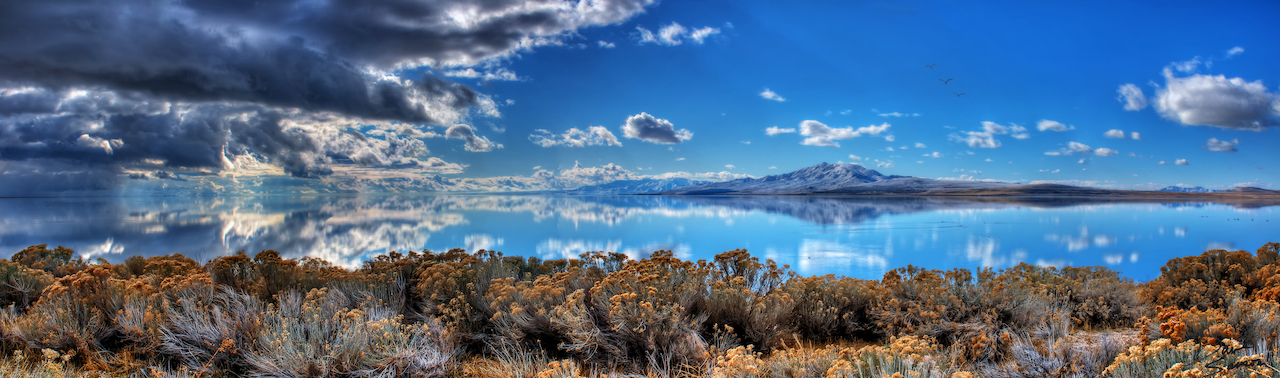
Great Salt Lake has seen a noteworthy net increase, rising 1.8 feet since October. This positive change in lake levels adds to the actions and investments from the Legislature over the past three years to preserve and protect the lake. DNR actions, such as the modification of the GSL berm, as directed in the governor’s executive order, have reduced salinity and shown signs of benefiting the brine shrimp population in the south arm of the lake. Currently, SWE in the GSL basin is 123% of normal. February precipitation in the GSL basin was 183% of normal, bringing the water year precipitation value to date to 118% of normal.
Statewide, reservoirs are currently at an impressive 83%, showcasing solid water storage. This level is 22% higher than normal and a drastic contrast to last year when reservoirs statewide were around half full. These figures reaffirm the strength and importance of our water storage and infrastructure.
“Our reservoirs are our water savings account,” Hasenyager said. “This critical infrastructure provides us with the water security we have today. Continued studies and investments in water infrastructure will be needed for Utah’s future generations.”
Heading into these crucial months, continued focus on water conservation and management remains essential. Monitoring these positive indicators allows us to navigate the upcoming months with preparedness and adaptability.
To encourage water conservation among Utahns, the Department of Natural Resources continues to promote initiatives such as the Agricultural Optimization Program for farmers and SlowtheFlow.org for residents. These programs aim to educate and incentivize water-saving practices, ensuring Utahns become more drought-resilient and prepare for future conditions.
# # #
For more information, contact Michael Sanchez, public information officer, at 385-226-8967 or email msanchez@utah.gov.