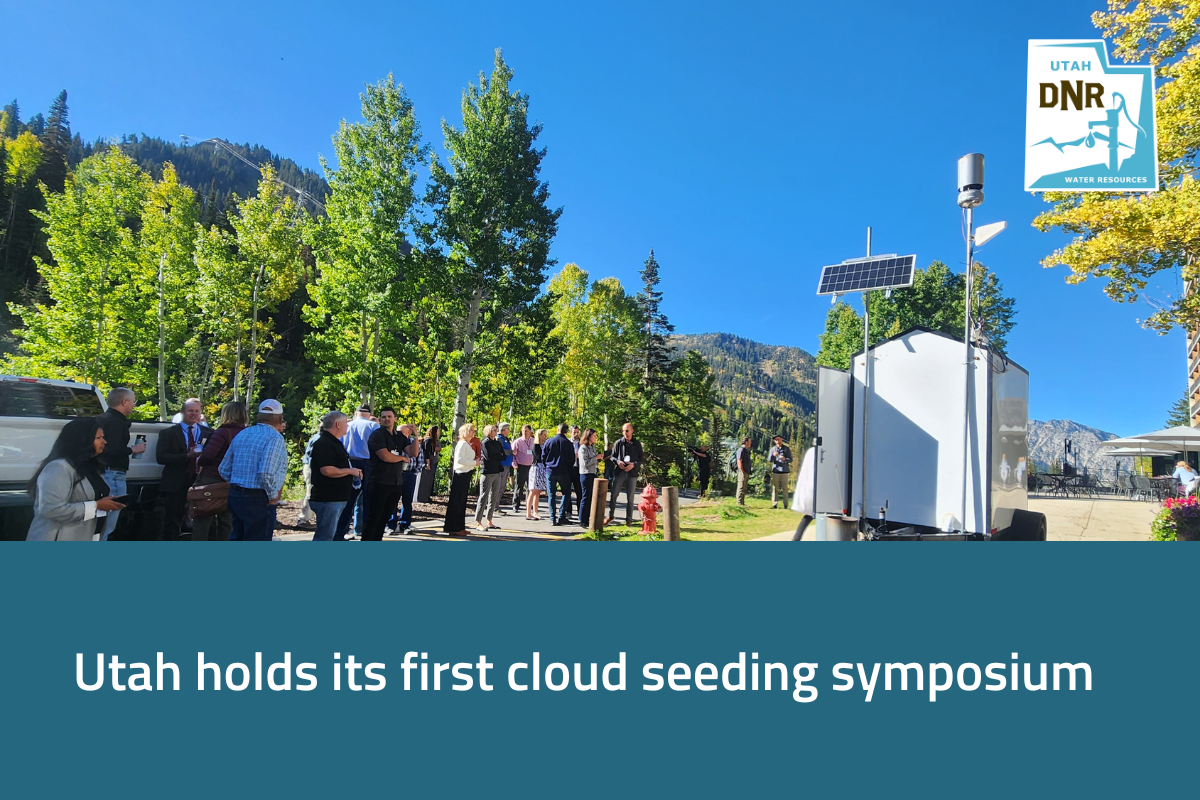
SALT LAKE CITY (Sept. 28, 2023) – Today marked the commencement of the highly anticipated Utah Cloud Seeding Symposium at Snowbird Resort. The landmark event proved to be a pivotal moment in the realm of weather modification, bringing together leading experts, researchers and stakeholders to explore the multifaceted world of cloud seeding.
“The Utah Cloud Seeding Symposium underscores the critical role of weather modification in addressing our state’s water resource challenges,” Joel Ferry, executive director of the Utah Department of Natural Resources, said. “By bringing together experts, researchers and policymakers, we are fostering a collaborative environment where innovative ideas can thrive. Weather modification is not just a science. It’s a crucial tool for ensuring water sustainability in our arid region.”
Utah has been cloud seeding since the early 1950s to help augment the state’s water supply. Cloud seeding is a low-cost, low-risk, non-structural method that can increase water supply between 5-15% in seeded areas at a cost between $10 -$15 per acre-foot for the additional water. In 2023, the Utah Legislature allocated $12 million in one-time funding and provided an annual budget of $5 million to expand the program. Utah currently has around 170 cloud seeders statewide. Utah intends to add an additional 60 manual generators and 120 remote generators over the next few years.
“The investment from the legislature has been incredible. As we discuss cloud seeding’s scientific foundations, operational nuances and environmental implications, we look forward to charting a path that enhances the effectiveness and sustainability of cloud seeding programs in Utah and beyond,” said Ferry.
Utah’s cloud seeding program exemplifies regional collaboration, with enthusiastic support from neighboring states. This collaborative effort transcends state boundaries as experts and policymakers come together to tackle the shared challenge of water resource management in arid regions. By combining resources, knowledge, and the collective commitment to cloud seeding, Utah and its neighboring states are working in unison to enhance water supplies and ensure a resilient water supply for the entire region.
“Collaboration between states is not only about improving individual programs but also has the intention of providing more water supply for the entire region,” Tom Ryan, Resource Specialist, Metropolitan Water District of Southern California, said. “The challenges we face with water scarcity do not adhere to state borders, and through initiatives like cloud seeding, we can collectively bolster our water resources.”
Note to Editors:
- High-resolution images of the event are available in this folder.
###
For more information, contact Michael Sanchez, public information officer, at 385-226-8967 or email msanchez@utah.gov.