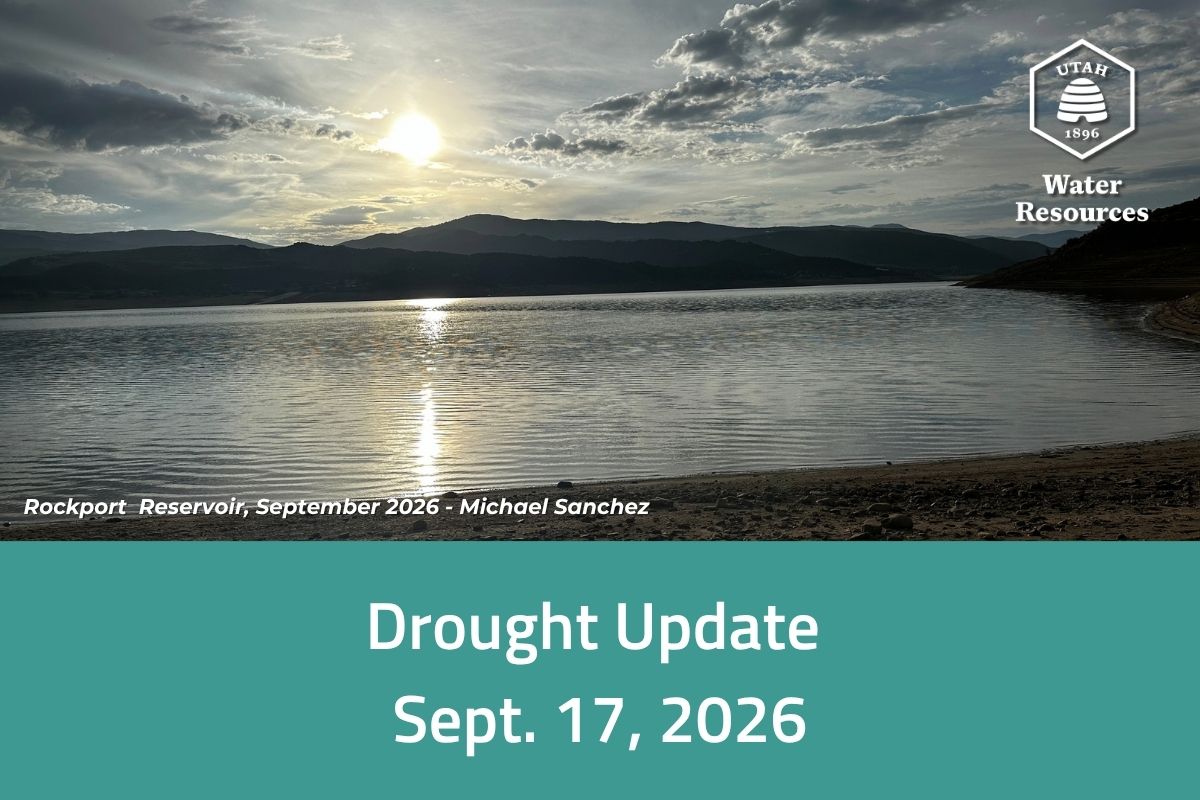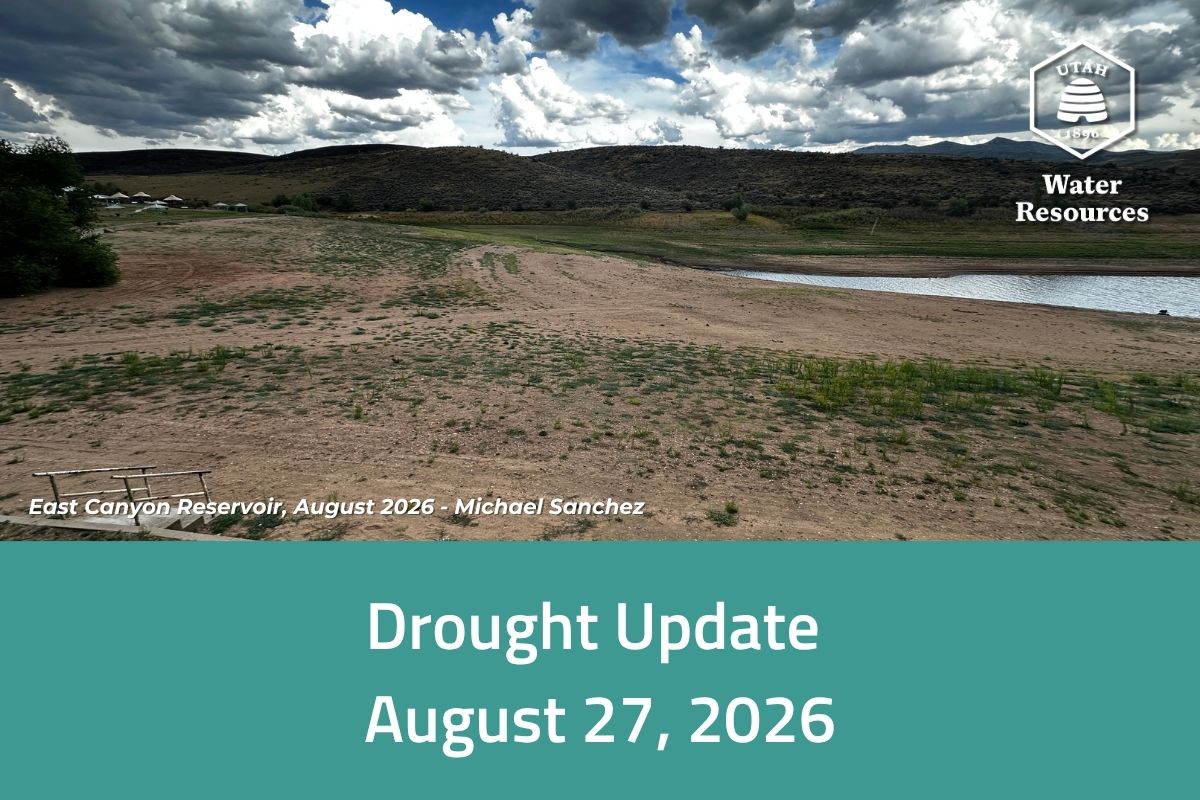

SALT LAKE CITY (April 23, 2026) – In a typical year, Utah’s runoff – which refills our reservoirs – would just be getting underway. However, due to record-low snowpack and record-high temperatures, peak runoff has already come and gone. While larger reservoirs with multiple years of storage are doing well, smaller reservoirs with one or two years of storage capacity are struggling.
On Tuesday, the Utah Department of Natural Resources met with county leaders and water providers to share critical data to support proactive resource management. Officials presented a bleak outlook for streamflow and runoff to help local leaders prepare for the coming months.
“To address extreme drought, we are asking county leaders to coordinate with water providers and review drought contingency plans and consider if a county-specific drought declaration is warranted,” Joel Ferry, executive director of the Utah Department of Natural Resources, said. “While the state remains a resource for data and guidance, water planning – including any potential restrictions – takes place on a local level to reflect conditions in the area.”
The state’s Drought Response Committee, which consists of representatives from a variety of state agencies, is closely monitoring conditions and will make a recommendation to Gov. Spencer Cox if conditions warrant a statewide drought declaration, which is in effect for 30 days unless extended by the Legislature. Currently, 100% of the state is in some form of drought, and 59% is in extreme drought.
Reservoir storage averages 72% full, which is slightly higher than normal for this time of year but down from 82% recorded last year. Statewide stream flow runoff is anticipated to be around 50% of normal. Natural inflows from the Colorado River into Lake Powell are expected to be 40% of normal this year. On March 21, Utah, Wyoming, Colorado and New Mexico approved a plan for the release of between 660,000 and 1 million acre-feet from Flaming Gorge Reservoir beginning as early as this week and extending through April 2027 in order to protect critical elevations at Lake Powell.
As noted in the Natural Resources Conservation Service’s April 1st Water Supply Outlook Report, every major basin in Utah had record-low snowpack as of April 1, and some were almost completely melted out.
On April 28 at 8:30 a.m., DNR, Water Rights and Water Resources are holding a virtual media update/Q&A to highlight conditions.
The Department of Natural Resources continues to promote initiatives such as the Agricultural Water Optimization Program for farmers and SlowtheFlow.org for residents. These programs aim to educate and incentivize water-saving practices, helping Utahns become more drought-resilient and better prepared for future conditions. Many indoor water-saving tips are available on the Slow the Flow website.
# # #
For more information, contact Michael Sanchez, public information officer, at 385-226-8967 or email msanchez@utah.gov.