The funds will be distributed through the Board of Water Resources in an effort to increase water conservation statewide
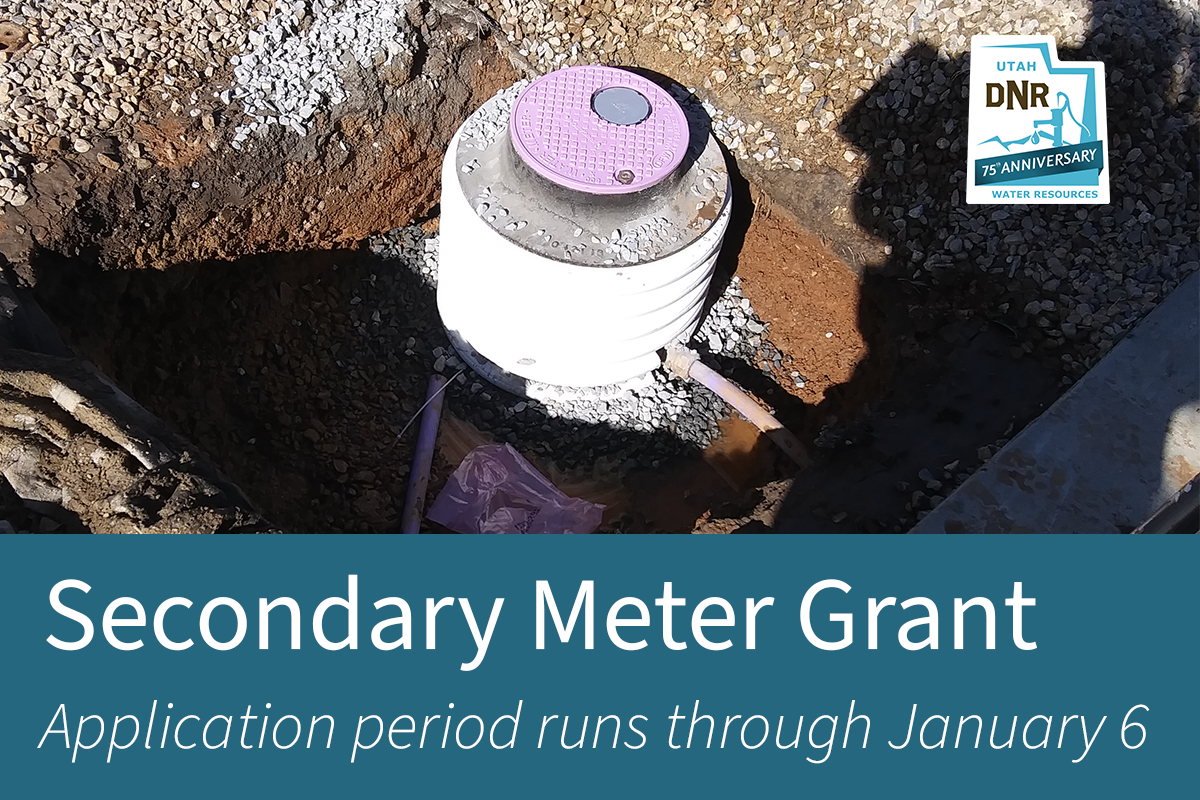
SALT LAKE CITY (Nov. 30, 2022) – After two initial two rounds of funding, the Utah Division of Water Resources is opening up a third round of applications for the purchase and installation of secondary meters. Through the first two rounds, the Board of Water Resources authorized over $190 million towards this effort. Systems that have installed secondary meters have seen a 20-30% reduction in water use simply by informing customers how much water they use. These grant funds are for secondary water providers, not residents.
“This is an exciting time for water in the state of Utah. The legislature has prioritized water conservation like never before,” Candice Hasenyager, director of the Division of Water Resources said. “Once these meters are installed, they will provide accurate data that will be beneficial to water planning and conservation.”
The division sent letters and emails to many of the secondary water providers throughout the state, in an effort to increase the numbers of applicants in this round of funding.
“Many of the larger secondary water systems already know about the division’s funding opportunities and have applied for funding,” Marisa Egbert, the division’s Funding Section Manager said. “We are trying to reach out to the smaller secondary systems and rural communities that have not received grant funding yet.”
“We appreciate all the secondary water providers who have taken this opportunity that will help the state stretch our water supply,” said Hasenyager. “As we battle drought, measuring and tracking our water is extremely important.”
Based on previous applications, the division estimates the grant funds will cover the costs to purchase and install around 114,000 secondary water meters. The estimated amount of water expected to be conserved is approximately 54,000 acre-feet of water (about the size of East Canyon Reservoir).
Approximately $58 million is remaining in grant funds out of the $250 million allocated by the Legislature. Grant funds can cover up to 70% of the project costs. The third round of funding runs from Nov. 28 to Jan. 6, 2023.
For more information and to apply for funding, please click on the following link: Secondary Meter Grants.
###
The Utah Division of Water Resources is one of ten divisions housed within the Department of Natural Resources. Tasked with planning, conserving, developing and protecting Utah’s water resources, the Division serves as Utah’s water steward.