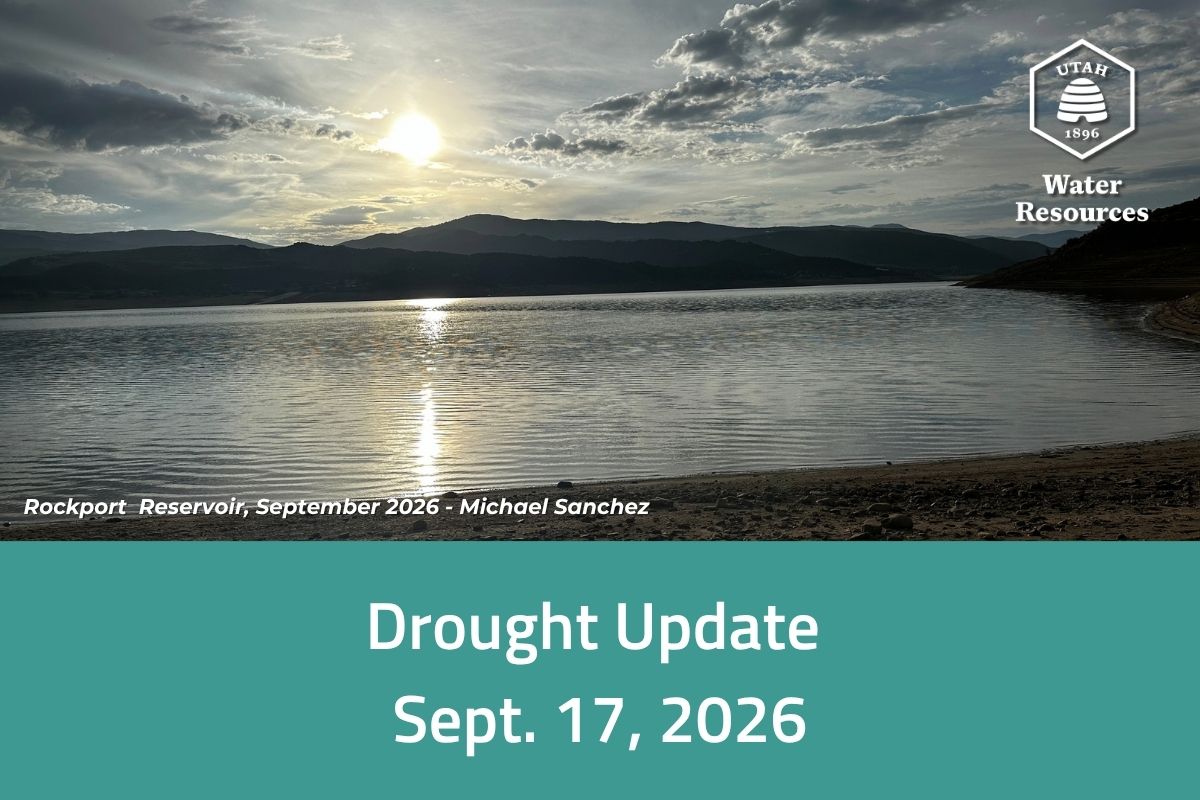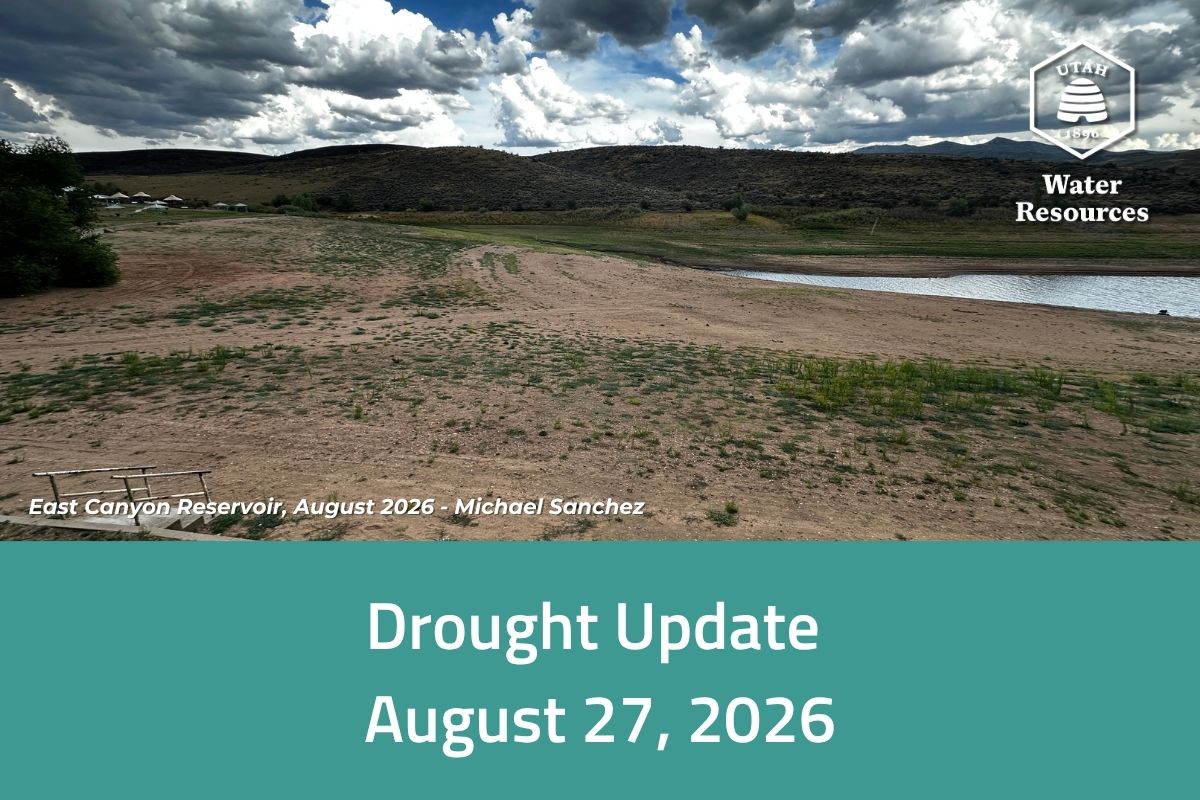
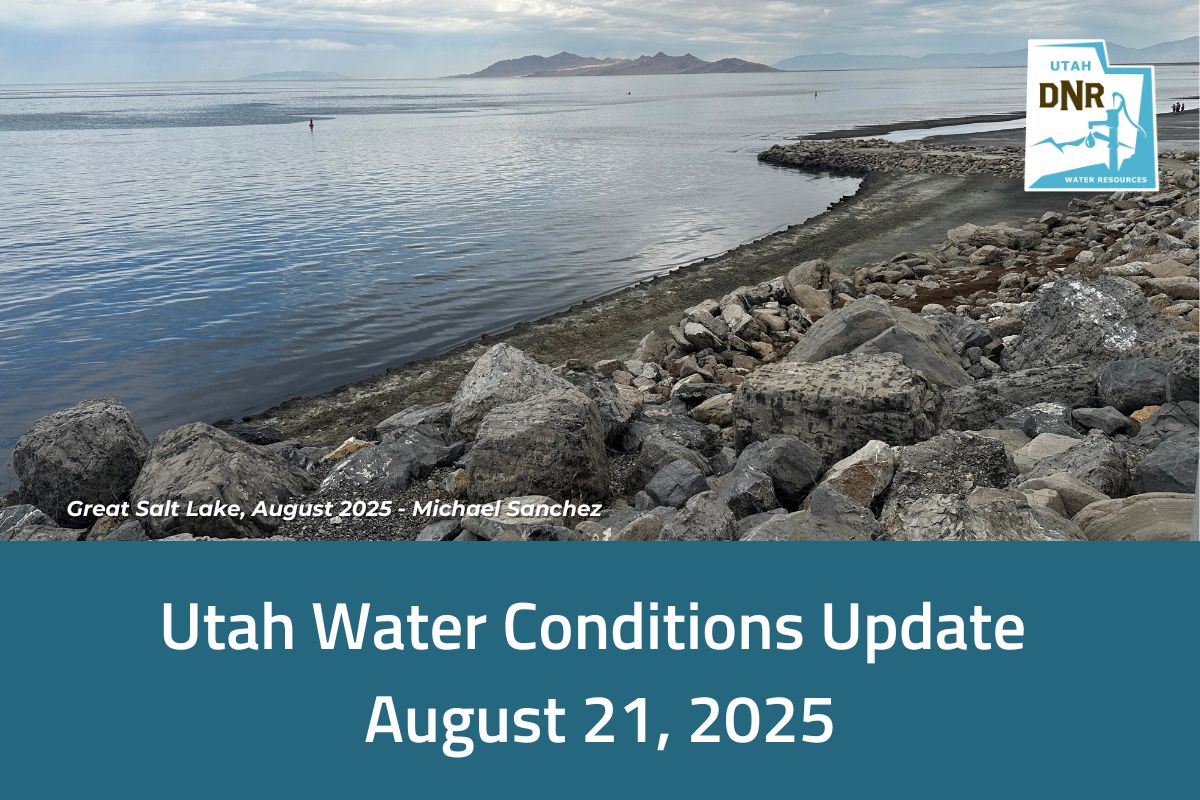
SALT LAKE CITY (August 21, 2025) – Utah’s reservoir levels are showing a drastic decline. Since June 1, the state has drawn down reservoirs at a rate more than double the normal rate. This is due to increased demand, lower-than-normal spring runoff and an extremely dry summer.
“Reservoirs are our first line of defense against drought and are vital for our communities and ecosystems,” Candice Hasenyager, director at the Utah Division of Water Resources, said. “The rapid decline we’re seeing is a clear signal that we must be more vigilant and use less water.”
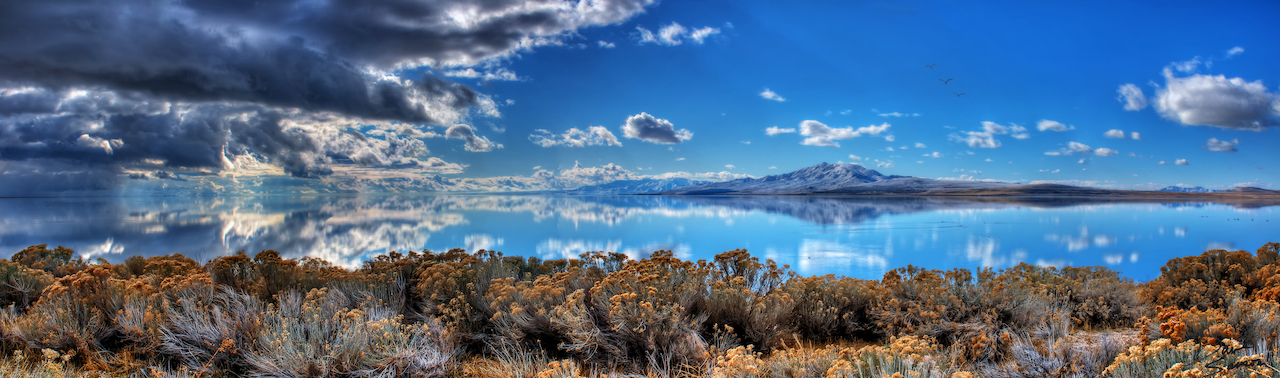
While current statewide reservoir storage sits at 67%, it is only slightly above the normal level of 65% for this time of year and significantly lower than the 83% reported last year at this time. According to the USGS, Great Salt Lake peaked in mid-April at an elevation of 4193.6 and is now at 4191.6 feet.
“A hot summer and increased demand have contributed to low reservoir levels and the decline of Great Salt Lake,” Hasenyager said. “We will continue to see these critical water bodies decline until temperatures cool and the irrigation season ends in October.”
In Utah, about 95% of our water supply comes from snowpack. Reservoir storage helps us preserve that water for use in dry summer months and drought years. To encourage water conservation among Utahns, the Department of Natural Resources continues to promote initiatives such as the Agricultural Water Optimization Program for farmers and SlowtheFlow.org for residents. These programs aim to educate and incentivize water-saving practices, ensuring Utahns become more drought-resilient and prepare for future conditions. Many indoor water-saving tips are available on the Slow the Flow website.
# # #
For more information, contact Michael Sanchez, public information officer, at 385-226-8967 or email msanchez@utah.gov.