SALT LAKE CITY (October 21, 2025) – The beginning of our Water Year, which began on Oct. 1, has delivered outstanding early-season precipitation. This historic moisture has profoundly improved water conditions and significantly boosted the outlook for our region’s water supply.
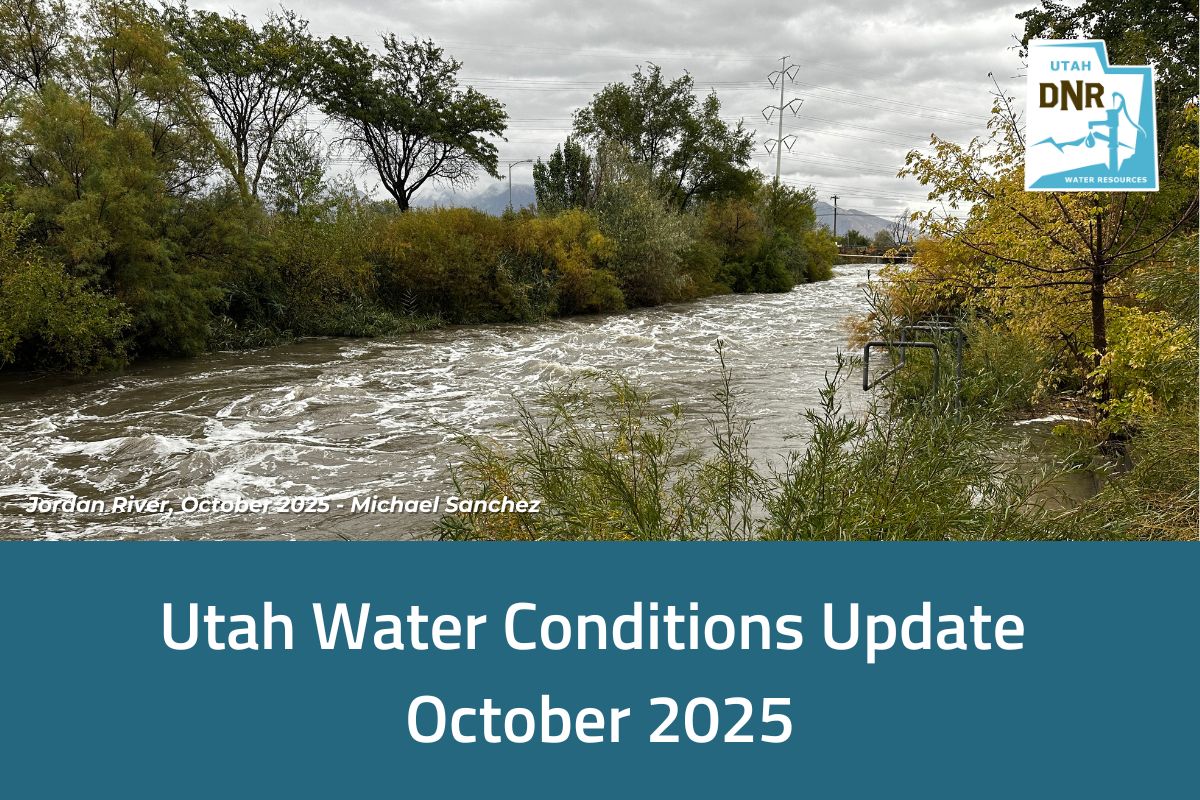
Recent storms have provided unprecedented rainfall for the month. Salt Lake City’s total precipitation for October stands at 4.95″, officially making it the wettest October on record over the last 151 years of data collection at the Salt Lake City Airport. This early accumulation is a powerful first step for the water year.
“Yes, we can all collectively say ‘we needed this’ as we think about the recent storms and our water supply,” Candice Hasenyager, director at the Utah Division of Water Resources, said. “The recent storms are a great start to the water year, but we have a long road ahead.”
The Water Year is a 12-month cycle used by hydrologists to track water resources running from Oct. 1 to Sept. 30. This timing is scientifically chosen because it captures the entire process, including fall and winter precipitation (such as snow) and the subsequent spring runoff, within a single reporting period.
One of the most immediate and critical benefits of this early moisture is the saturation of our soils. Our soil moisture levels are 10% higher than in a typical year. In dry years, the ground acts like a sponge, absorbing much of the snowmelt before it can run off into reservoirs. Because our soils are now well-saturated, they are primed for a more efficient spring runoff.
In Utah, about 95% of our water supply comes from snowpack. Reservoir storage helps us preserve that water for use in dry summer months and drought years. To encourage water conservation among Utahns, the Department of Natural Resources continues to promote initiatives such as the Agricultural Water Optimization Program for farmers and SlowtheFlow.org for residents. These programs aim to educate and incentivize water-saving practices, ensuring Utahns become more drought-resilient and prepare for future conditions. Many indoor water-saving tips are available on the Slow the Flow website.
# # #
The Utah Division of Water Resources is one of 10 divisions housed within the Department of Natural Resources. Tasked with planning, conserving, developing and protecting Utah’s water resources, the division serves as Utah’s water steward.