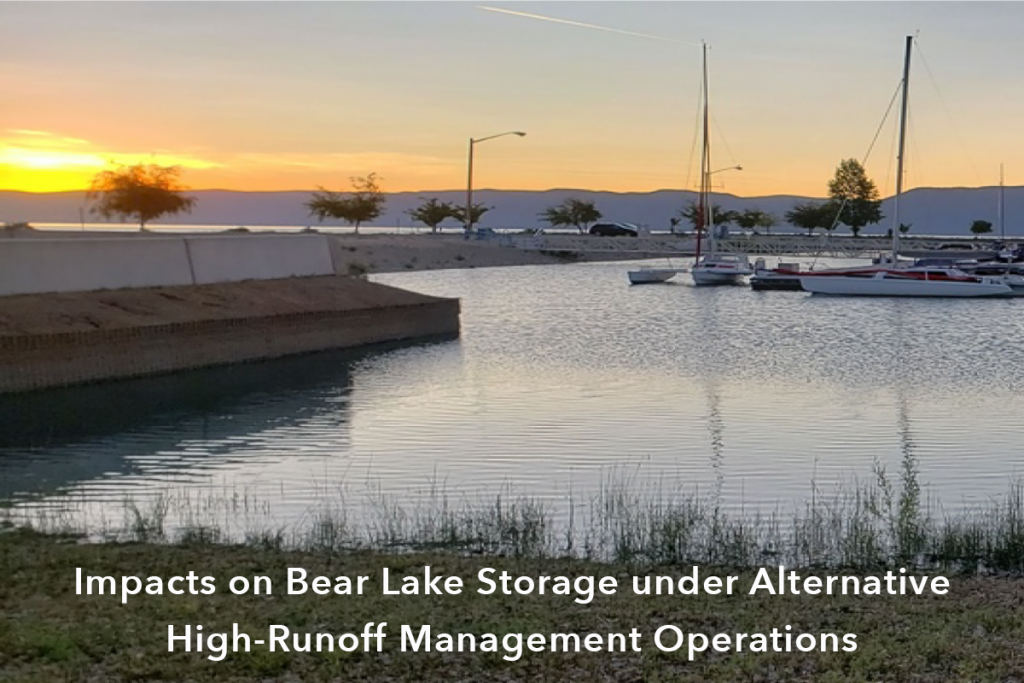
Can more water be stored in Bear Lake by adjusting flood control operations? Idaho, Utah and PacifiCorp worked with reservoir modeling experts at the University of Colorado to answer this question. The technical report “Impacts on Bear Lake Storage under Alternative High-Runoff Management Operations” published today, summarizes findings about how different flood control operations can raise lake levels and increase storage.
The “Joint Bear River Planning Model” developed for this study is the first of its kind on the Bear River system. This planning model will be used by Idaho, Utah, Wyoming and PacifiCorp and ensures all parties are using the same data. This study may be the first of several water supply studies in the Bear River Basin.
“We worked collectively using the model to address questions, challenges and concerns that affect Bear Lake operations and the Bear River system,” said Connely Baldwin, a PacifiCorp hydrologist. “This model makes sure we’re all on the same page, using the same data and working from the same assumptions.”
In addition to its status as a recreation destination, Bear Lake is used to store water for irrigation and provide flood control benefits. The study found that changes to flood operations at BearLake could increase reservoir storage in the lake, especially, at the beginning of a drought cycle. The study indicated that the additional storage gained would be roughly equal to the
amount of water released from Bear Lake and used for irrigation in one year. In addition to increasing storage, the proposed changes would also increase lake levels. To increase storage in Bear Lake, it would be necessary to accommodate increased flows through flood-prone sections of the Bear River like Gentile Valley.
“We understand the concerns of the property owners in flood-prone areas,” said David Hoekema, a hydrologist leading the modeling effort for Idaho, “it’s critical that we solve the problem of accommodating increased flows through these parts of the river for the project to go forward.”
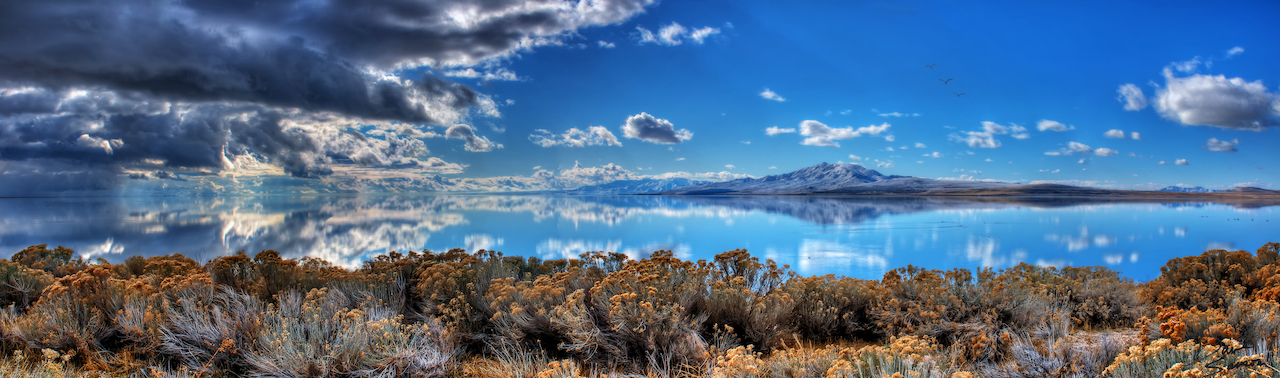
Bear Lake and Great Salt Lake are some of the region’s most important water resources. Bear River operations affect both lakes. Bear Lake, with its brilliant blue water, is a popular tourist destination for recreation, stores water for irrigators and provides wildlife habitat, flood control, along with other benefits. Great Salt Lake recreation and wildlife habitat, industry and tourism contribute $1.3 billion to Utah’s economy. The level of Great Salt Lake fluctuates annually based on snowpack, tributary inflows, and water withdrawals, and other factors. Over the last 20 years, Great Salt Lake levels have dropped. Utah’s technical team intends to investigate linking the “Joint Bear River Planning Model” with the “Great Salt Lake Integrated Model”. The Bear, Weber and Jordan rivers are tributaries to Great Salt Lake.
“The Joint Bear River Planning Model will increase our ability to study ways to improve the health of Great Salt Lake,” says Jake Serago, a senior engineer with the Utah Division of Water Resources. “Increasing upstream storage could affect the lake and we need to find that balance of upstream and downstream needs. One of the ways to keep lake levels up is water conservation. As people reduce water use, more water can stay in streams and lakes.”
Bear Lake operations are not changing at this time. The three states and PacifiCorp will continue to work together to investigate ways to improve the operation of the Bear River system.
Read the full report the Impacts on Bear Lake Storage under Alternative High-Runoff Management Operations
MEDIA CONTACTS
Utah Media Contact: Marcie Larson
801-641-0986 | MarcieLarson@utah.gov
PacifiCorp Media Contact: David Eskelsen
800-775-7950 | David.Eskelsen@rockymountainpower.net
Idaho Media Contact: Steve Stuebner
208-484-0295 | sstuebner@cableone.net