
SALT LAKE CITY (August 13, 2026) – As the summer continues, Utah is experiencing notable shifts in local conditions. While the wildfire season remains active, a downward trend in average high temperatures is appearing. This past July ranked as the second-hottest July on record in Utah, underscoring the season’s intensity.
“While we are starting to see some relief in daytime highs, the impacts of our long, hot summer are still very much felt across our water systems and landscapes,” Jonathan Jennings, meteorologist for the Utah Division of Water Resources, said. “It’s crucial that we don’t let our guard down. Please continue to be mindful of your water use and stay safe outdoors. In Utah, August is typically the month with the most active monsoonal weather patterns.”
Wildfire Impacts on Water Bodies
Wildfire activity continues to pose challenges across the state. Beyond the immediate threats to land and property, these fires impact our water infrastructure, watersheds and water quality. A primary concern is the runoff from burn scars that feed into our water bodies, including our wells and springs. Post-fire runoff can affect drinking water and recreation by increasing turbidity and nutrient loading, elevating organic carbon and metals, altering water color, taste, and odor, transporting woody debris to water intakes, and damaging recreational access points. Where fecal sources are present, runoff may also mobilize material from livestock, wildlife, or septic systems, increasing the transport of pathogens like E. coli. The state is working closely with local partners to monitor these conditions and protect water resources and infrastructure. The state urges the public to be aware of these occurrences and how they affect our watersheds.
Wildfire Update
Fire activity has increased across Utah this year, with 842 wildfires reported, including 428 human-caused fires. Utahns are encouraged to continue practicing Fire Sense by preventing human-caused ignitions, staying aware of local fire conditions, and reporting any new wildfire immediately.
Reservoirs, Lakes and Streams Impacted
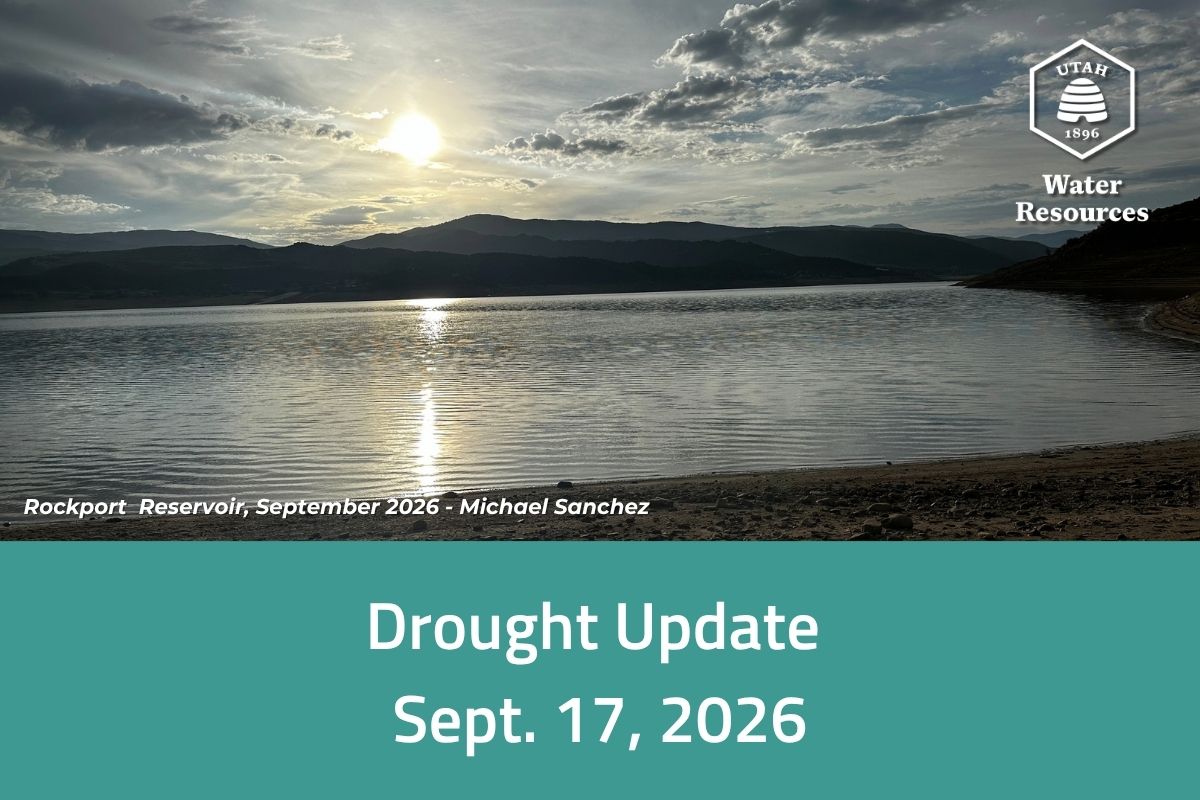
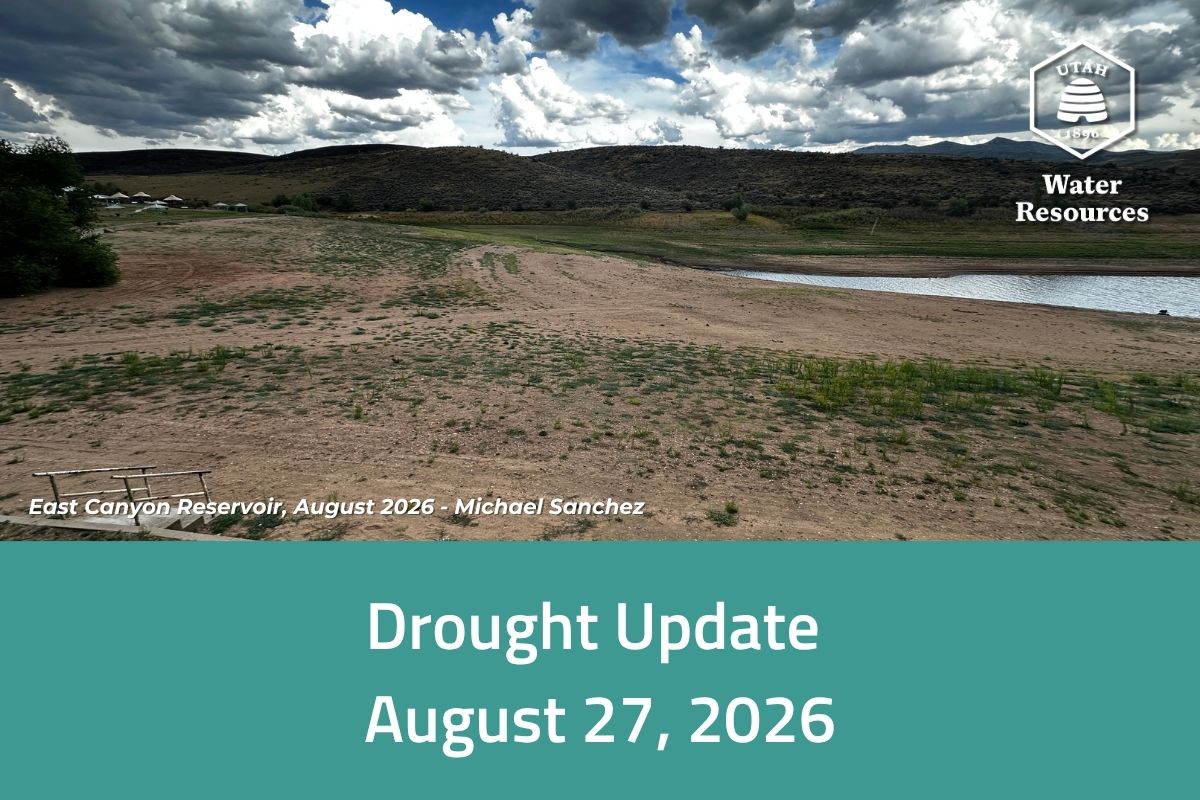
- Reservoir storage averages 54% full, which is 13% lower than normal for this time of year, and 16% lower than the same time last year.
- Both boat ramps at Yuba State Park are now closed. When reservoirs reach low levels, some parks are forced to close their boat launch ramps in order to help better protect visitors and their property. Visit the Division of State Parks boat ramp conditions webpage for more information.
- Because Harmful Algal Blooms (HABs) are happening across the state, residents are urged to learn how to identify them and find current water advisories at HABs.utah.gov.
River Conditions Reflect Continued Drought Across Utah
Utah stream flows continue to decline through August following low snowpack and reduced spring runoff. Conditions vary by basin, with the Bear River remaining stronger while the Upper Provo, Upper Duchesne and Upper Sevier continue to experience low natural flows.
Key Observations from Around the State
- Bear River – Conditions remain stronger than many other basins. Better snowpack, summer rainstorms and reservoir releases helped support flows in July. Updated August numbers have not yet been submitted.
- Upper Provo River – Natural flow measured 30.5 cfs on Aug. 2, providing about 9.9% of direct flow rights. Summer monsoons can temporarily increase flows, but drought conditions persist.
- Upper Duchesne River – Natural flow measured 182 cfs on Aug. 8, compared with 306 cfs during the 2021 drought year. Flows have continued to decline through the summer, resulting in priority-based cuts.
- Upper Sevier River – Natural flow measured 34 cfs on Aug. 7, less than half the 76 cfs recorded during the 2021 drought. Deliveries were approximately 8% of first-class direct flow rights.
For detailed river system statistics and conditions, see the full report here.
Conservation Efforts
The state continues to promote initiatives such as the Agricultural Water Optimization Program for farmers and SlowtheFlow.org for residents. These programs aim to educate and incentivize water-saving practices, helping Utahns become more drought-resilient and better prepared for future conditions. Many indoor water-saving tips are available on the Slow the Flow website.
# # #
For more information, contact Michael Sanchez, public information officer, at 385-226-8967 or email MASanchez@utah.gov.